|
 BABEL BABEL
Babel Day Centre provides mental health
service to migrants (individuals, families,
children, adolescents and groups since 2007
in Athens, Greece and rather in Kipseli,
maybe the most multicultural neighborhood of
the city.
Babel’s main mission is the mental
healthcare of migrants (regardless their
legal or residence status) living in Athens
and distinguished with the triple scheme of
the migrant or refugee condition, a
different ethno-cultural background and the
experience of mental disorder. Towards this,
Babel endeavors to create a home (including
assistance for material conditions) where
people can be heard, understood and
supported as individuals, as a couple,
family or group with a mental health
request. Within that home every person can
retain or make their meaning for the loss of
the original home and the expectations for a
new personal, family or social life.
Emphasis is given to a customized approach
and an individual treatment plan; both
evolved as a result of a consultation
between the professionals and the
beneficiary. A beneficiary-centered network
is set up every time so that more needs are
met. Operation responsibility of Babel Day
Centre is under Syn-eirmos Social Solidarity
NGO (www.syn-eirmos.gr).
 SXEDIA
The Non-Profit Organization "Diogenis NGO"
was established in the early 2010 for
supporting homeless and socially excluded
persons to reintegrate our society. Sxedia’s
main goal is the activation, the
strengthening, the empowerment, the training
and last the creation of perspectives of
jobs for those fellow men of ours who face
poverty and social exclusion to an extreme
degree.
 PROLEPSIS PROLEPSIS
The Prolepsis Institute is a
non-governmental organization, active in the
field of medical research, health promotion,
environmental and occupational health since
1990. Prolepsis strongly support the belief
that health is a fundamental, nonnegotiable
and inalienable right for every human being.
The vision of the institute is a society
that maintains and promotes physical and
mental health and prosperity equally and
justly for all people, especially the most
vulnerable, while respecting human freedom
and protects our planet for future
generations. The mission is to respond to
major public health needs of Greece and
Europe, by conducting rigorous academic
research and translating it into action
through education, advocacy and direct
service. Prolepsis promote health and health
equity for all Europeans. This mission is
rooted in the belief that health equality is
a necessary pre-requisite for broader social
justice. Prolepsis is committed to equality,
social inclusion and respect for individual
differences and choices.
 POLYDYNAMO, POLYDYNAMO,
 MUNICIPALITY
OF ATHENS MUNICIPALITY
OF ATHENS
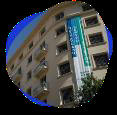
The Multipurpose Center for the Homeless of
the Municipality of Athens is a modern
structure operating 24 hours a day. It
consists of 55 apartments, each of which
includes an average of three bedrooms with
TV, heater, ceiling fan, kitchen and
bathroom. The structure can accommodate more
than 300 people, a capacity that fully meets
the needs of the city and consists of a Day
Centre, a Dormitory and a Hostel. The guests
of the Multipurpose Homeless Centre are
provided with accommodation, food,
psychological support and medical care. A
Nursing Service operates in the building,
staffed by experienced personnel who support
the guests when they need nursing care. At
the same time, the social workers carry out
medical consultations and deal with requests
on pension, legal and employment issues. A
lending library also operates in the centre
in cooperation with the Equal Society.
Through daily contact with the workers and
through a holistic approach to social
reintegration, the integration of the guests
into programme
implemented in cooperation with the central
administration and other bodies, such as the
"Housing & Work" programme, is promoted.
 MSF DAY CARE CENTER
MSF brings humanitarian medical assistance
to victims of conflict, natural disasters,
epidemics or healthcare exclusion.
MSF offer basic healthcare, perform surgery,
fight epidemics, rehabilitate and run
hospitals and clinics, carry out vaccination
campaigns, operate nutrition centres, and
provide mental healthcare. MSF’s activities
include the treatment of injuries and
disease, maternal care and the provision of
humanitarian aid. Where necessary, MSF set
up sanitation systems, supply safe drinking
water, and distribute relief to assist
survival.
 POSITIVE
VOICE POSITIVE
VOICE
The Positive Voice is the Greek Association
of people living with HIV/AIDS. The
Association was founded in 2009 with the aim
of defending the rights of HIV positive
people, countering the spread of HIV/AIDS,
as well as limiting its social and economic
impact in Greece. According to its Statues,
in order to achieve its purpose, the
Association strives to ensure better
prevention and information practices, care
services and social care for people living
with HIV/AIDS and for social groups
vulnerable to HIV. At the same time, it
works for social acceptance, solidarity and
support for these groups in order to address
violations of their dignity and human
rights. “Red Umbrella Athens (RUA)” is an
Empowerment Center for Sex Workers. It was
created in December 2015 on the initiative
of “Positive Voice” (Greek Association of
People Living with HIV), “Checkpoint”
(Prevention & Sexual Health Centers) and
“Prometheus” (Hellenic Liver Patient
Association). Red Umbrella is designed and
implemented by people from both the sex
workers’ community and other vulnerable
social groups. Also, “Ref Checkpoint: the
prevention and sexual health centre for
refugees, migrants and asylum seekers”
provides accessibility to free testing and
counselling - without stigma and
discrimination.
 MÉDECINS
DU MONDE - OPEN POLYCLINICS MÉDECINS
DU MONDE - OPEN POLYCLINICS
Doctors of the World / Médecins du Monde –
Greece (MdM-Greece), founded in 1990, is a
medical humanitarian non-governmental
organization and is a member of Médecins Du
Monde International which consists of 17
delegations (Argentina, Belgium, Canada,
France, Germany, Greece, Italy, Japan,
Turkey, Luxembourg, the Netherlands,
Portugal, Spain, Sweden, Switzerland, United
Kingdom and the United States of America).
Médecins du Monde – Greece, since the
beginning of its operations, has been
implementing several projects within Greece
and abroad, in order to provide medical as
well as other services to marginalized
populations that cannot access healthcare
services and medical care.
The Open Polyclinics of Doctors of the World
operate in Athens and Thessaloniki. The Open
Polyclinics of Doctors of the World operate
with the main goal of providing primary
health care as well as social and
psychological support to people belonging to
vulnerable social groups, such as the
homeless, those in need, the uninsured,
immigrants, refugees without administrative
documents and to any other person with
limited or zero access to the National
Health System. In addition, there is the
possibility for patients to perform free
laboratory tests, through referrals to
collaborating organizations. After the
patients are monitored by the doctors of the
Polyclinic, they are given the necessary
medicines.
OKANA- “STEKI 46”
The Organisation Against Drugs (ΟΚΑΝΑ) has
been operational since 1995 as a legal
person that is governed by private law and
reports to the Ministry of Health and Social
Solidarity. Its constituent instrument
stipulates that OKANA shall: plan, promote,
coordinate and implement a national policy
on prevention, treatment and rehabilitation
of drug addicts; address the drug problem at
a national level, provide valid and
documented information, and raise public
awareness; establish and effectively manage
prevention centres, treatment units and
social and professional reintegration
centres. The Supervised Use Area is
essentially the place where active users can
use substances under supervision, safely,
with clean equipment, reducing the risks to
their health and the transmission of
diseases. The therapeutic approach is
accompanied by health care and the linking
of beneficiaries with other services, with
the ultimate aim of integrating them into a
treatment programme. At the same time, the
Supervised Use Area helps to reduce the
nuisance that may be created in the places
where drug addicts congregate, as well as
the delinquency that may be associated with
drug use. It is fully equipped and staffed
with a multidisciplinary team to meet the
needs of the beneficiaries. It includes 12
specially designed places for injecting
and/or inhaling pre-acquired drugs,
accommodation for beneficiaries, a clinic
for primary care and treatment of overdose
cases, and a space for
counselling/psychological support and
linking beneficiaries to a treatment
programme.
 PRAKSIS
DAY CENTER FOR HOMELESS AT PIRAEUS AND AT
ATHENS
The Open Day Centres for the Homeless of
PRAKSIS are located in Athens and Piraeus.
They are open, direct access structures to
address the basic needs of the population
experiencing homelessness and provide
primary health care, personal care and
hygiene services, as well as interfacing
with other services.
More specifically,
beneficiaries are empowered through a
framework that includes the following
services:
-
Daily accommodation in a safe and
properly heated/air-conditioned place;
-
Personal hygiene (hot bath) and provision of
sanitary items;
-
Use of washing machines for
cleaning clothes;
-
Provision of clothing and
footwear;
-
Provision of beverages and snacks;
-
Storage of personal belongings in a safe
place;
-
Basic health care and medication;
Participation in individual and/or group
meetings with specialized staff of the
Centre for the individualized assessment of
needs and joint planning of problem
management; Liaison with services for
housing, food, psychological support, legal
assistance, counselling, health, welfare,
social and labour reintegration, when
required.
In the context of the
long-standing significant volunteer presence
and offer, they were created and are still
operating today at the Homeless Day Centre
in Athens: Imathiotheque, Lending Library,
Film Club, Children's Corner.
PRAKSIS COMMUNITY CENTER
At the PRAKSIS Community Centre in Athens,
free primary health services are provided to
vulnerable social groups who experience
social exclusion regardless of their origin,
religion, gender, sexual orientation,
ideology or political beliefs. PRAKSIS’ s
main concern is the holistic treatment of
these people with the main objective of
prevention, provision and promotion of
health services. At the same time, the
inadequacies and dysfunctions of the public
health system are recorded and highlighted,
with particular emphasis on special groups
and the highlighting of the problems they
face and their subsequent linkage with the
relevant institutions. Health care services
are provided by a general practitioner, a
gynaecologist, a neurologist/psychiatrist
and a dentist, together with the
administration of pharmaceuticals from the
centre's social pharmacy if available. The
aim of the medical department is to provide
therapeutic intervention, health counselling
and education in the proper use of
medication. Also, as part of the Public
Health activities, information is provided
and tests for HIV, hepatitis B & C are
carried out with rapid tests.
========================
FOCUS GROUP DISCUSSION
´
What is the profile of PEH?
´
Which are the main challenges?
´
Are there are similarities among
our target groups?
´
Have there been any changes the
last year? To which direction?
´
What do we mean with the term
“participation”?
´
How do we approach
participation?
´
Which are the key
recommendations that we would
like to
address at local, national and EU level?
|


